
Hiroshi Mikitani and Henrik Fisker: The Entrepreneurs Who Rewrote the Rules
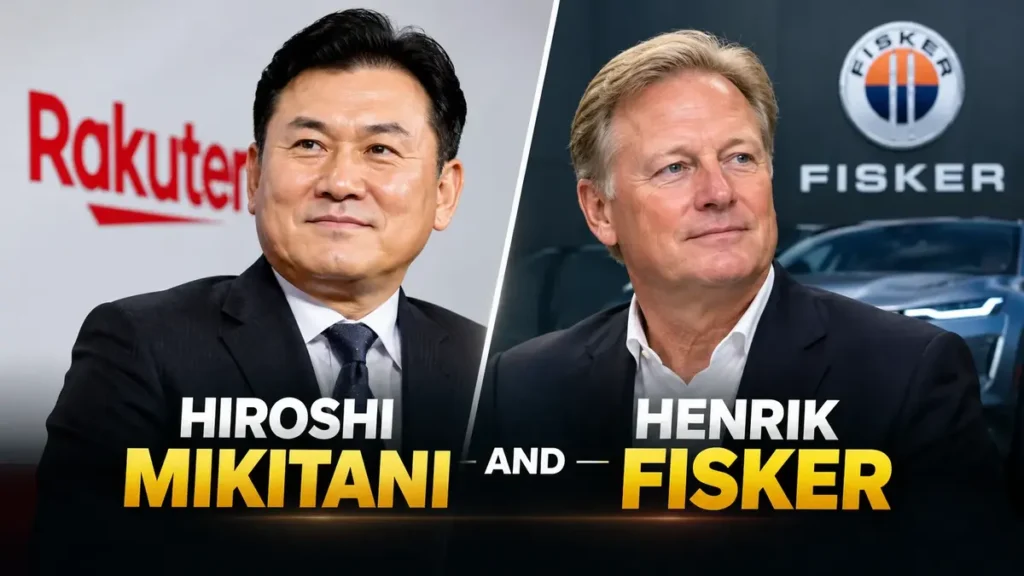
Most business comparisons circle the same Silicon Valley names, leaving out the global founders who actually rebuilt industries from the ground up. You miss powerful leadership lessons when you skip the stories of builders who crossed continents and sectors. This breakdown of hiroshi mikitani and henrik fisker uncovers the strategies, stumbles, and breakthroughs behind two of the most compelling entrepreneurial paths of the modern era.
Who Is Hiroshi Mikitani? The Mind Behind Rakuten
Hiroshi Mikitani founded Rakuten in 1997 from a tiny Tokyo office with just three employees and a bold idea: bring Japanese small businesses online. Today, Rakuten operates as one of the world’s largest e-commerce ecosystems, spanning fintech, telecommunications, and digital content.
As the Rakuten CEO and chairman, Mikitani grew the company’s gross merchandise sales past $30 billion annually. He earned his MBA from Harvard Business School after completing his undergraduate studies at Hitotsubashi University in Tokyo. His father, Ryoichi Mikitani, was a prominent economist, which gave young Hiroshi early exposure to market thinking and global trade dynamics.
Mikitani’s decision to make English the official corporate language at Rakuten in 2010 shocked the Japanese business establishment. He believed a Japanese tech billionaire could not compete globally while operating in a linguistic silo. That single move reshaped Rakuten’s hiring, internal culture, and international partnerships overnight.
Who Is Henrik Fisker? The Designer Turned EV Pioneer
Henrik Fisker started his career sketching cars for BMW and later Aston Martin, where he penned the iconic DB9 and V8 Vantage. His eye for dramatic proportions and clean surfaces made him one of the most recognized automotive design innovators in the industry.
In 2007, he co-founded Fisker Automotive to build plug-in hybrid luxury sedans. The Fisker Karma turned heads at auto shows worldwide but ran into battery supply problems and a devastating Hurricane Sandy flood that destroyed over 300 vehicles at a New Jersey port. The company filed for bankruptcy in 2013.
Fisker did not walk away. He launched Fisker Inc in 2016, this time targeting the mass-market electric vehicle segment with the Fisker Ocean SUV. The Fisker Inc founder secured a SPAC listing in 2020 and began production through a partnership with Magna Steyr in Austria. His persistence through two separate automotive ventures sets him apart from most car industry entrepreneurs.
Early Life and Education: Where It All Began
The story of hiroshi mikitani and henrik fisker starts in two very different corners of the world. Mikitani grew up in Kobe, Japan, surrounded by academic conversations at the dinner table. His father’s work as an economics professor planted seeds of entrepreneurial curiosity early.
Fisker was born in Allerød, Denmark, and spent his teenage years obsessing over car magazines and sketchbook drawings. He moved to Switzerland to study at the Art Center College of Design’s European campus before transferring to the main campus in Pasadena, California.
Both men left their home countries to sharpen their skills abroad. Mikitani went to Harvard. Fisker went to California. That willingness to leave familiar territory became a defining trait in both of their careers and a recurring theme when you study hiroshi mikitani and henrik fisker side by side.
Building Rakuten vs. Building Fisker Inc: A Tale of Two Startups
Mikitani launched Rakuten Ichiba as an online marketplace when most Japanese consumers still preferred physical department stores. He charged merchants a flat monthly fee instead of taking commissions, which attracted thousands of small sellers quickly. That pricing model became the backbone of Rakuten’s early growth.
Fisker took a far more capital-intensive path. Building a car company requires billions in tooling, safety testing, supply chain contracts, and regulatory approvals before a single vehicle reaches a customer. His first venture burned through $1.4 billion in combined private and government funding before collapsing.
The contrast between these two startup journeys highlights a core truth about hiroshi mikitani and henrik fisker: software and marketplace businesses scale faster with less capital, while hardware ventures demand patience, deeper pockets, and a higher tolerance for catastrophic failure.
Leadership Styles Compared
Mikitani leads with data and consensus. He introduced a company-wide “Shikumika” philosophy — a Japanese term meaning systematic structuring of processes. Every Rakuten team documents workflows, tests hypotheses, and iterates based on measurable outcomes.
Fisker leads with vision and aesthetics. He personally oversees design details down to the curvature of a headlight housing. His leadership style leans heavily on creative conviction, sometimes at the expense of operational speed.
When you compare hiroshi mikitani and henrik fisker as leaders, you see a classic split between the analytical operator and the creative visionary. Neither approach is wrong, but each carries distinct risks. Mikitani’s method can slow bold pivots. Fisker’s method can outrun financial discipline.
Industry Disruption: E-Commerce Meets Electric Mobility
Rakuten disrupted Japanese retail by giving mom-and-pop shops a digital storefront when Amazon had barely entered the market. The e-commerce disruption Mikitani triggered forced legacy retailers like Aeon and Ito-Yokado to accelerate their own online strategies years ahead of schedule.
Fisker targeted the electric vehicle entrepreneur space at a time when Tesla dominated headlines but few competitors offered affordable, design-forward alternatives. The Fisker Ocean promised a sub-$40,000 price point with a solar roof and fully recycled interior materials — a combination no other automaker matched at launch.
Both men identified massive incumbent weaknesses and attacked them directly. That pattern of confronting entrenched players head-on is the strongest common thread linking hiroshi mikitani and henrik fisker across their respective industries.
Financial Journeys and Funding Strategies
Mikitani bootstrapped Rakuten with roughly $250,000 in personal savings and family loans. The company reached profitability within three years and went public on the JASDAQ exchange in 2000. Rakuten later used its cash flow to acquire Viber, Ebates, and Kobo, expanding into messaging, cashback shopping, and e-readers.
Fisker relied on venture capital, a $529 million U.S. Department of Energy loan, and eventually a $2.9 billion SPAC merger with Spartan Energy Acquisition Corp. The capital requirements of automotive manufacturing left little room for error, and every production delay burned through reserves fast.
The funding gap between these two stories is enormous. Mikitani built a global conglomerate on relatively modest early capital. Fisker needed billions before delivering his first mass-market vehicle. This financial contrast remains one of the most instructive takeaways from studying hiroshi mikitani and henrik fisker together.
Global Expansion Tactics
Rakuten expanded by acquiring local platforms in France (PriceMinister), Germany (Tradoria), and the United States (Buy.com, later Rakuten.com). Mikitani also invested heavily in Southeast Asia through joint ventures in Indonesia, Thailand, and Malaysia.
Fisker pursued global reach through manufacturing partnerships rather than acquisitions. His deal with Magna Steyr allowed Fisker Inc to produce vehicles in Europe without building its own factory. He also announced plans for sales in India, the UK, and Scandinavia before production fully ramped.
The expansion playbook of hiroshi mikitani and henrik fisker reflects their industries. E-commerce scales through platform acquisition and localization. Automotive scales through contract manufacturing and distribution agreements. Both paths work, but they carry very different risk profiles.
Setbacks, Controversies, and Comebacks
Mikitani faced criticism when Rakuten’s mobile network launch in Japan suffered widespread coverage gaps in 2020. Customers complained about dropped calls and dead zones. He responded by accelerating base station construction and eventually secured over five million subscribers within two years.
Fisker’s setbacks have been more public and more severe. The bankruptcy of Fisker Automotive in 2013 drew congressional scrutiny over the DOE loan. Fisker Inc later faced production delays, a short-seller report from Hindenburg Research, and a sharp stock decline in 2023 and 2024 that tested investor confidence.
Resilience defines both men. Mikitani absorbed the mobile network criticism and pushed forward. Fisker rebuilt an entire company from the ashes of his first failure. The ability to absorb public humiliation and keep building is perhaps the most underrated quality shared by hiroshi mikitani and henrik fisker.
Innovation and Technology Philosophy
Mikitani views technology as an ecosystem play. Rakuten’s “Rakuten Ecosystem” connects shopping, credit cards, mobile service, banking, and travel under a single loyalty points program called Rakuten Points. Over 100 million Japanese users participate, creating a data flywheel that competitors struggle to replicate.
Fisker views technology through the lens of sustainability and user experience. His vehicles emphasize recycled materials, solar energy integration, and over-the-air software updates. He has spoken publicly about designing cars that feel like “tech products on wheels” rather than traditional automobiles.
Both founders treat technology as a means to lock in customer loyalty. Mikitani does it through points and cross-selling. Fisker does it through design emotion and environmental identity. This shared obsession with customer retention connects hiroshi mikitani and henrik fisker more closely than their different industries might suggest.
Detailed Comparison Table: Hiroshi Mikitani and Henrik Fisker
| Category | Hiroshi Mikitani (Rakuten) | Henrik Fisker (Fisker Inc) |
|---|---|---|
| Birthplace | Kobe, Japan | Allerød, Denmark |
| Education | Hitotsubashi University; Harvard MBA | Art Center College of Design |
| First Major Company | Rakuten (1997) | Fisker Automotive (2007) |
| Current Role | Chairman & CEO, Rakuten Group | Founder & Executive Chairman, Fisker Inc |
| Industry | E-Commerce, Fintech, Telecom | Electric Vehicles, Automotive Design |
| Funding Model | Bootstrapped → IPO → Acquisitions | VC → DOE Loan → SPAC Merger |
| Revenue Scale | ~$15 billion+ annual revenue | Pre-revenue / early production stage |
| Key Product | Rakuten Ichiba Marketplace | Fisker Ocean SUV |
| Global Presence | 30+ countries | Targeting US, Europe, India |
| Biggest Setback | Mobile network coverage issues (2020) | Fisker Automotive bankruptcy (2013) |
| Leadership Style | Data-driven, process-oriented | Vision-driven, design-obsessed |
| Innovation Focus | Ecosystem loyalty (Rakuten Points) | Sustainable materials, solar roofs |
| Notable Acquisition | Viber, Ebates, Kobo | None (organic growth model) |
| Net Worth Estimate | ~$7–9 billion | Significantly lower, fluctuating |
| Public Listing | Tokyo Stock Exchange (4755) | NYSE (FSR) via SPAC |
This table makes the contrasts and parallels between hiroshi mikitani and henrik fisker immediately visible. Mikitani operates at massive scale with diversified revenue. Fisker operates at the frontier of a capital-hungry industry with everything still to prove.
What Modern Founders Can Learn from Both Leaders
Study hiroshi mikitani and henrik fisker long enough and three clear lessons emerge for anyone building a company today.
- Start with a pricing advantage. Mikitani’s flat-fee model undercut competitors and attracted sellers fast. Find the pricing lever your industry ignores.
- Survive your first failure. Fisker’s bankruptcy could have ended his career. Instead, he used the lessons to build a leaner second company. Your first venture is a tuition payment, not a verdict.
- Build an ecosystem, not a product. Mikitani connected shopping, finance, and telecom into a single loyalty loop. Fisker aims to connect vehicle ownership with sustainable lifestyle branding. Products get copied. Ecosystems create switching costs.
These principles apply whether you are launching a SaaS tool, a consumer brand, or a hardware startup. The business strategy comparison between these two founders cuts across sectors because the underlying human behaviors — trust, habit, identity — remain constant.
Frequently Asked Questions
1. Who is Hiroshi Mikitani?
Hiroshi Mikitani is the Japanese billionaire founder, chairman, and CEO of Rakuten Group, one of the world’s largest e-commerce and fintech companies, headquartered in Tokyo.
2. Who is Henrik Fisker?
Henrik Fisker is a Danish automotive designer and entrepreneur who founded Fisker Automotive and later Fisker Inc, focusing on electric vehicles like the Fisker Ocean SUV.
3. What connects Hiroshi Mikitani and Henrik Fisker?
Both are serial entrepreneurs who disrupted legacy industries — Mikitani in Japanese retail and Fisker in automotive — through bold risk-taking, global ambition, and a refusal to accept the status quo.
4. Did Henrik Fisker design cars for Aston Martin?
Yes. Henrik Fisker served as design director at Aston Martin and is credited with shaping the DB9 and V8 Vantage, two of the brand’s most celebrated modern models.
5. How did Hiroshi Mikitani fund Rakuten’s early growth?
Mikitani started Rakuten with approximately $250,000 in personal and family funds. The company reached profitability within three years and went public in 2000 on Japan’s JASDAQ exchange.
6. Is Fisker Inc still operating?
Fisker Inc faced significant financial and production challenges through 2023 and 2024, including stock declines and restructuring discussions. The company’s long-term status remains uncertain as of the latest public filings.
Final Thoughts: Pick Your Side or Learn from Both
The story of hiroshi mikitani and henrik fisker is not about picking a winner. It is about understanding two radically different paths to building something the world did not have before. Mikitani proved that a flat-fee marketplace could topple Japanese retail giants. Fisker proved that a designer with no factory could still put a car on the road — twice.
If you are building a company right now, steal Mikitani’s ecosystem thinking and Fisker’s creative stubbornness. Subscribe to our newsletter for weekly breakdowns of the founders reshaping global business, and share this article with a fellow entrepreneur who needs a fresh dose of perspective.