
What Do Hans Vestberg and Jeff Greene Have in Common?
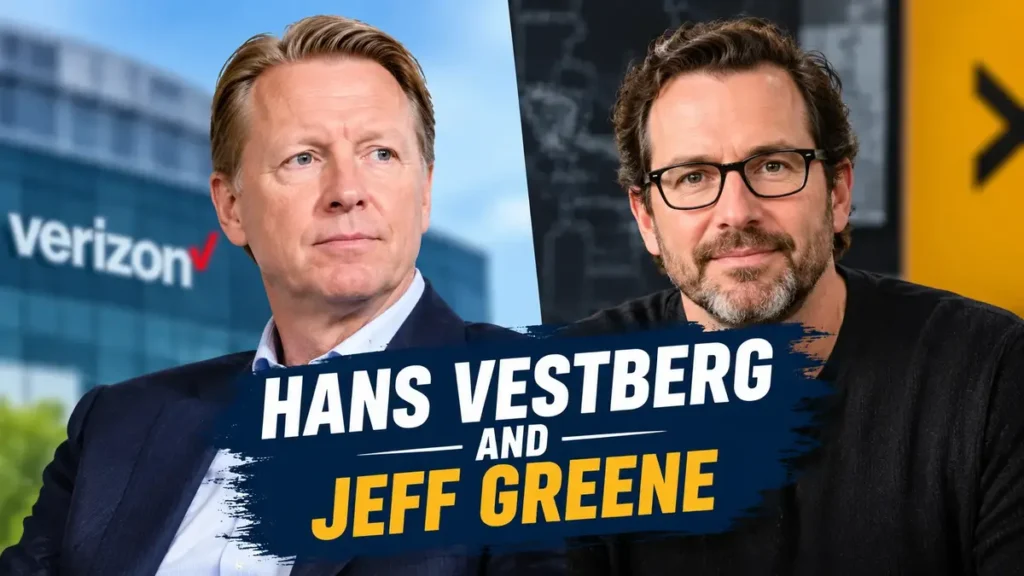
Telecom networks and investment portfolios face constant disruption from new technologies and shifting global markets. Leaders who fail to adapt watch their organizations fall behind while competitors capture growth. Hans Vestberg and Jeff Greene built their reputations by spotting these shifts early and committing capital to the infrastructure and assets that shape how the world communicates, connects, and invests today.
Who Is Hans Vestberg and What Drives His Telecom Vision?
Hans Vestberg is a Swedish-born executive who currently serves as Chairman and CEO of Verizon Communications. He took the top position at Verizon in 2018 after spending nearly three decades in the telecommunications industry.
His career began at Ericsson in 1988, where he held roles across finance, operations, and regional management. This global exposure gave him a deep understanding of how mobile networks function across different regulatory environments and consumer markets.
Vestberg believes that connectivity forms the backbone of modern economic growth. He has publicly stated that 5G technology will transform industries far beyond mobile phones, including healthcare, logistics, and smart manufacturing.
From Ericsson to Verizon: The Vestberg Career Timeline
Vestberg joined Ericsson straight out of Uppsala University and climbed through the ranks over 28 years. He became President and CEO of Ericsson in 2010, steering the company through the critical transition from 3G to 4G LTE networks.
He left Ericsson in 2016 and joined Verizon as Chief Technology and Architecture Officer in 2017. Within a year, the Verizon board promoted him to CEO, signaling a clear strategic shift toward aggressive 5G deployment.
Under his leadership, Verizon invested over $50 billion in network infrastructure between 2018 and 2023. This capital commitment positioned the company as one of the first U.S. carriers to launch commercial 5G Ultra Wideband service in major metropolitan areas.
You can verify his executive profile directly on Verizon’s official leadership page.
How Hans Vestberg and Jeff Greene Approach 5G and Digital Infrastructure
The connection between Hans Vestberg and Jeff Greene becomes clearer when you examine their shared interest in digital infrastructure. Vestberg builds the physical networks that carry 5G traffic, while Greene invests in the technology companies and real estate assets that depend on reliable connectivity.
5G networks require dense infrastructure — small cells, fiber backhaul, and edge data centers. These physical assets sit on real property, which connects directly to Greene’s investment expertise. The expansion of telecom infrastructure creates significant opportunities for property owners and developers.
Both leaders understand that the next wave of economic growth depends on fast, reliable digital connections. Their different vantage points — corporate telecom operations and diversified investment — give them complementary perspectives on where capital should flow.
Who Is Jeff Greene and How Did He Build His Fortune?
Jeff Greene is an American billionaire entrepreneur, real estate investor, and former U.S. Senate candidate from Florida. He first gained national attention in 2007 when he made a highly publicized bet against the subprime mortgage market, earning over $1 billion during the financial crisis.
Before that trade, Greene had already built a successful career in technology and financial services. He recognized early that the internet would reshape how businesses operate and invested accordingly during the late 1990s and early 2000s.
His willingness to take contrarian positions defines his investment philosophy. While most market participants followed the herd into mortgage-backed securities, Greene studied the underlying data and bet the opposite direction.
Jeff Greene’s Real Estate Empire and Investment Strategy
Real estate became Greene’s primary wealth engine after his financial market successes. He owns a portfolio of luxury properties across South Florida, Los Angeles, and international markets that includes hotels, residential towers, and commercial developments.
His most notable property is the Palazzo di Amore mansion in Beverly Hills, which he listed for $195 million in 2019 — one of the highest-priced residential listings in U.S. history at the time.
Greene’s real estate strategy focuses on trophy assets in supply-constrained markets. He targets properties with long-term appreciation potential rather than short-term flipping opportunities. This patient approach mirrors the capital-intensive timelines that telecom executives also navigate.
Hans Vestberg and Jeff Greene: Corporate Leadership vs Entrepreneurial Risk
Comparing Hans Vestberg and Jeff Greene reveals two fundamentally different approaches to building influence. Vestberg operates within the structure of a publicly traded corporation with over 100,000 employees and strict regulatory obligations.
Greene answers to no board of directors and no quarterly earnings calls. He allocates his own capital, sets his own timelines, and absorbs his own losses. This freedom allows him to make bold bets that a corporate CEO simply cannot authorize.
Vestberg must balance shareholder expectations with long-term infrastructure investments that may not generate returns for a decade. Greene can hold a property or technology investment for twenty years without explaining his strategy to anyone.
The Role of Technology in Both Careers
Technology connects the careers of Hans Vestberg and Jeff Greene even though they operate in different sectors. Vestberg’s entire professional life revolves around telecommunications hardware, software, and network architecture.
Greene’s early wealth came from recognizing how technology would disrupt traditional financial markets. His investments in internet-related companies during the late 1990s positioned him to profit from the digital transformation that Vestberg’s networks now support.
The 5G rollout that Vestberg champions creates new opportunities for technology investors like Greene. Faster networks enable autonomous vehicles, remote surgery, and smart city infrastructure — all sectors that attract significant venture capital and private equity.
How Hans Vestberg and Jeff Greene Adapt to Market Shifts
Market adaptability separates lasting leaders from temporary successes. Hans Vestberg and Jeff Greene both demonstrated this quality at critical moments in their careers.
Vestberg guided Ericsson through the painful transition from legacy telecom equipment to IP-based mobile broadband. He then repeated the adaptation process at Verizon, shifting the company’s focus from traditional wireline services to wireless and 5G. You can read more about Ericsson’s corporate evolution on Ericsson’s official history page.
Greene pivoted from technology investments to financial derivatives and then to real estate as market conditions changed. Each transition required him to learn new industries, build new networks, and accept new risks.
Key Leadership Lessons from Hans Vestberg and Jeff Greene
Studying the careers of Hans Vestberg and Jeff Greene reveals several practical lessons for aspiring business leaders and investors.
- Commit to long timelines: Both 5G networks and real estate developments require years of sustained investment before generating meaningful returns.
- Build global perspective: Vestberg’s experience across European, Asian, and American markets gave him insights that purely domestic executives lack.
- Embrace contrarian thinking: Greene’s subprime bet succeeded precisely because he disagreed with the consensus view.
- Invest in infrastructure: Physical assets — whether cell towers or luxury properties — retain value through economic cycles better than speculative instruments.
- Stay technically literate: Both leaders maintain deep understanding of the technologies that drive their respective industries.
What the Future Holds for Telecom and Investment Leaders
The next decade will test both telecom operators and diversified investors with challenges that current models may not fully address. Quantum computing threatens existing encryption standards, AI-driven automation reshapes workforce requirements, and climate change introduces new risks to physical infrastructure.
Vestberg has committed Verizon to achieving net-zero carbon emissions by 2035, recognizing that environmental sustainability now factors into corporate competitiveness. Greene’s real estate holdings face similar pressures as coastal properties confront rising sea levels and stricter building codes.
The leaders who thrive will combine Vestberg’s operational discipline with Greene’s willingness to challenge conventional wisdom. The intersection of Hans Vestberg and Jeff Greene’s approaches — building reliable infrastructure while taking calculated risks — offers a practical blueprint for navigating uncertainty.
Hans Vestberg and Jeff Greene: A Side-by-Side Comparison
| Category | Hans Vestberg | Jeff Greene |
|---|---|---|
| Primary Industry | Telecommunications | Real Estate and Investment |
| Current Role | Chairman and CEO, Verizon | Private Investor and Entrepreneur |
| Nationality | Swedish-American | American |
| Education | Uppsala University, Sweden | Johns Hopkins University |
| Career Start | Ericsson, 1988 | Technology and financial markets, 1990s |
| Signature Achievement | Led Verizon’s 5G Ultra Wideband rollout | $1B+ subprime mortgage bet in 2007 |
| Investment Style | Corporate capital allocation, infrastructure | Contrarian, diversified, long-hold |
| Key Asset Class | Wireless networks and fiber infrastructure | Luxury real estate and financial instruments |
| Public Profile | Earnings calls, industry keynotes | Senate campaign, real estate headlines |
| Risk Tolerance | Moderate, board-governed | High, self-directed |
Why Understanding Hans Vestberg and Jeff Greene Matters for Your Career
The trajectories of Hans Vestberg and Jeff Greene offer practical insights regardless of your industry. You do not need to run a Fortune 50 company or own a Beverly Hills mansion to apply their principles.
Vestberg’s career teaches the value of deep specialization. He spent nearly 30 years in telecommunications before reaching the top, building expertise that generalist competitors could not match.
Greene’s career teaches the value of pattern recognition across industries. His ability to identify the subprime crisis before Wall Street did came from studying data that others ignored.
Both approaches — going deep and going wide — produce results when applied consistently over time.
The Growing Importance of Digital Infrastructure Investment
Digital infrastructure now ranks alongside roads, bridges, and power grids as essential national assets. The 5G networks that Vestberg builds at Verizon carry the data that powers everything from emergency services to autonomous vehicles.
Greene’s investment lens adds another dimension to this picture. As telecom companies deploy small cells and edge data centers, they need physical locations — rooftops, parking garages, commercial buildings. Property owners who understand this trend can negotiate favorable lease terms with carriers.
The convergence of telecom and real estate creates opportunities that neither industry could capture alone. This cross-sector insight is exactly the kind of thinking that both leaders have demonstrated throughout their careers.
How Regulatory Environments Shape Their Decisions
Telecom executives like Vestberg operate under intense regulatory scrutiny. The Federal Communications Commission, the Department of Justice, and international regulators all influence how Verizon deploys its networks and prices its services.
Greene faces a different regulatory landscape. Real estate investors navigate zoning laws, environmental regulations, and tax codes that vary dramatically by jurisdiction. His decision to concentrate holdings in South Florida reflects both market dynamics and Florida’s relatively favorable tax environment.
Understanding these regulatory frameworks helps explain the strategic choices that both leaders make. Neither operates in a vacuum — government policy shapes their opportunities and constraints at every level.
Frequently Asked Questions
1. What is Hans Vestberg best known for?
Hans Vestberg is best known as the Chairman and CEO of Verizon Communications, where he has led the company’s aggressive 5G network expansion since 2018. He previously served as CEO of Ericsson for six years.
2. How did Jeff Greene make his fortune?
Jeff Greene built his fortune through technology investments in the 1990s, a billion-dollar bet against subprime mortgages in 2007, and an extensive luxury real estate portfolio across Florida and California.
3. Do Hans Vestberg and Jeff Greene work together?
They do not have a direct business partnership. They operate in different sectors — telecom and real estate — but their careers intersect around the broader theme of digital infrastructure investment and technology-driven growth.
4. What is Hans Vestberg’s approach to 5G?
Vestberg treats 5G as foundational infrastructure for entire industries, not just faster mobile internet. He has directed over $50 billion in network investment to build Verizon’s 5G Ultra Wideband coverage across major U.S. cities.
5. Has Jeff Greene been involved in politics?
Yes. Greene ran for the Democratic nomination in Florida’s 2018 U.S. Senate race. His campaign focused on healthcare reform, economic inequality, and technology policy. You can review his campaign records through the Federal Election Commission.
6. Why should I follow the careers of Hans Vestberg and Jeff Greene?
Following their careers helps you understand how telecom infrastructure and investment capital shape the digital economy. Their decisions influence network speeds, property values, and the pace of technological adoption that affects every connected device you use.
Start Paying Attention to the Infrastructure Behind Your Digital Life
The paths of Hans Vestberg and Jeff Greene prove that influence in modern business comes in many forms. Vestberg builds the networks that connect billions of devices. Greene identifies the assets and market shifts that generate lasting wealth.
Both leaders share a commitment to long-term thinking, technical literacy, and the courage to make unpopular decisions when the data supports their position. Their careers will continue shaping how America communicates, invests, and grows for decades to come.
Read Verizon’s quarterly reports, study real estate trends in tech-heavy markets, and evaluate how 5G deployment affects industries you care about. The more you understand the forces that leaders like Vestberg and Greene navigate, the better prepared you become to make your own strategic decisions. Take that first step today.