
The Best Empanada Peruana Near Me: A Complete Guide to Finding Authentic Peruvian Pastries
TL;DR: Searching for the best empanada peruana near me? This guide explains what makes Peruvian empanadas unique, the top fillings to try, how to spot the real deal, and practical tips for finding great ones in your city — whether you’re a first-timer or a longtime fan.
You type “best empanada peruana near me” into your phone, and suddenly you’re drowning in options — or worse, you get zero results. Either way, you’re left wondering which spots actually serve the real thing and which ones just slap a Latin-sounding name on a generic hand pie.
This guide will walk you through everything you need to know: what a genuine Peruvian empanada looks and tastes like, the fillings worth your time, and how to track down the best ones in your area without wasting money on disappointing imitations.
Quick Overview
- Peruvian empanadas are typically baked (not fried) and feature a slightly sweet, tender dough.
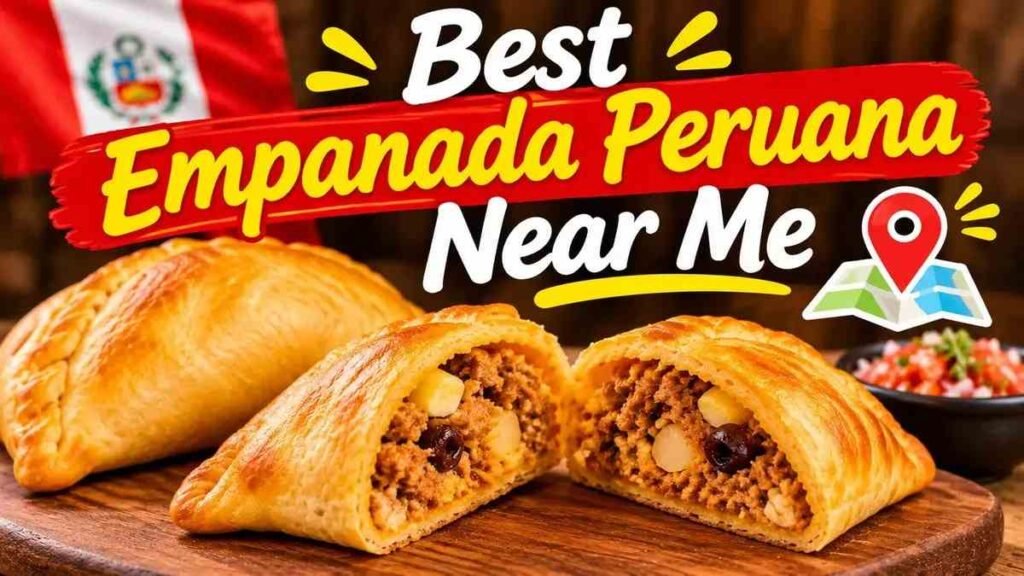
- The most iconic filling is empanada de carne — seasoned ground beef with hard-boiled egg, olives, and raisins.
- They’re larger and flatter than Argentine or Chilean versions.
- Authentic spots often double as bakeries (panaderías) or family-run Peruvian restaurants.
- Peak freshness matters — the best ones come out of the oven in the morning or early afternoon.
What Exactly Is an Empanada Peruana?
At its simplest, an empanada is a stuffed pastry. You’ll find variations across Latin America, Spain, and the Philippines, but the Peruvian version has its own identity.
An empanada peruana starts with a soft, slightly sweet wheat dough that’s rolled thin and folded over a savory filling. The edges are sealed with a decorative repulgue (a braided crimp), and the whole thing goes into the oven until golden.
Unlike the flaky, puff-pastry style you might see in some South American countries, the Peruvian dough is closer to a tender shortbread. It holds together without shattering into a thousand pieces when you bite in — which is a good thing, because the fillings are juicy.
What Sets Peruvian Empanadas Apart from Other Latin American Styles?
If you’ve had empanadas from Argentina, Chile, or Colombia, you might assume they’re all basically the same. They’re not.
Peruvian empanadas tend to be larger, flatter, and baked rather than deep-fried. The dough has a subtle sweetness that balances the savory filling, and the spice profile leans on ají amarillo (a yellow Peruvian chili) and cumin rather than the heavy paprika you’d find in Argentine versions.
The filling itself is more complex. Where a Chilean empanada might stick to beef, onion, and olive, the Peruvian version layers in hard-boiled egg, black olives, and sometimes raisins — a combination that sounds unusual until you taste how the sweetness and saltiness play off each other.
Peru’s food culture has gained serious global recognition over the past two decades. As National Geographic’s guide to Peruvian cuisine highlights, the country’s culinary identity is shaped by Indigenous, Spanish, African, Chinese, and Japanese influences — and that fusion shows up clearly in something as humble as an empanada.
| Feature | Peruvian | Argentine | Chilean |
|---|---|---|---|
| Cooking method | Baked | Baked or fried | Baked |
| Dough texture | Tender, slightly sweet | Flaky, buttery | Firm, bread-like |
| Size | Large and flat | Medium, puffy | Medium, round |
| Signature filling | Beef, egg, olive, raisin | Beef, onion, egg | Beef, onion, egg, olive |
| Key spice | Ají amarillo, cumin | Paprika, cumin | Cumin, oregano |
The Most Popular Fillings You Should Try
Walk into any Peruvian bakery and you’ll see a glass case lined with empanadas. Here are the ones worth grabbing first:
- Empanada de Carne (Beef): The undisputed classic. Seasoned ground beef mixed with diced onion, ají amarillo, hard-boiled egg slices, black olives, and raisins. If you only try one, make it this.
- Empanada de Pollo (Chicken): Shredded chicken in a lighter, slightly creamier sauce. Often includes the same olive-and-egg garnish. A great pick if beef isn’t your thing.
- Empanada de Queso (Cheese): Simple and satisfying — usually filled with a melting white cheese like queso fresco or mozzarella. Kids love these, and honestly, so do most adults.
- Empanada de Lomo Saltado: A newer, more modern take that stuffs the pastry with Peru’s famous stir-fried beef, tomatoes, onions, and soy sauce. It’s a fusion within a fusion.
- Empanada de Ají de Gallina: Filled with the creamy, walnut-thickened chicken stew that’s a staple of Lima’s home kitchens. Rich, slightly spicy, and deeply comforting.
The beef and chicken versions are the easiest to find outside Peru. The lomo saltado and ají de gallina fillings are rarer — if you spot them on a menu, that’s usually a sign the kitchen knows what it’s doing.
How to Tell If a Peruvian Empanada Is the Real Deal
Not every place that advertises “Peruvian empanadas” actually makes them the traditional way. Here’s what to look for:
Check the dough. A real Peruvian empanada has a soft, matte-gold crust — not a shiny, egg-washed glaze or a puffy, croissant-like shell. If the pastry shatters into flakes when you pick it up, you’re probably eating an Argentine-style version.
Look for the filling combo. The beef-egg-olive-raisin quartet is the telltale signature. If the filling is just plain ground beef and onion with no olives or egg in sight, it’s been simplified for a broader audience. That’s not necessarily bad, but it’s not the authentic experience.
Ask about the ají amarillo. This yellow chili pepper is the backbone of Peruvian cooking. A kitchen that uses it in their empanada filling is almost certainly run by someone who grew up with the real thing.
Notice the size and shape. Authentic Peruvian empanadas are wide and relatively flat — think of a half-moon that’s been gently pressed down. They’re not tall, puffy pockets.
Finding the Best Empanada Peruana Near Me
So how do you actually locate a great one in your city? Here’s a practical approach that works better than just scrolling through generic review apps.
Start with Peruvian restaurants, not general “Latin” spots. A restaurant that specifically identifies as Peruvian — especially one run by a Peruvian family — is far more likely to make empanadas the way they’re made in Lima or Arequipa. Generic “Latin American” restaurants often blend cuisines and may serve a hybrid version.
Search for Peruvian bakeries (panaderías). In cities with large Peruvian communities — think Paterson, NJ; Los Angeles; Miami; Houston — you’ll find bakeries that bake empanadas fresh every morning. These are often the best and cheapest options, and they sell out fast.
Use targeted search terms. Instead of just typing the obvious phrase, try variations like “Peruvian bakery near me,” “panadería peruana,” or “empanada de carne peruana.” These narrower queries tend to surface more authentic results.
Check community groups. Local Peruvian or Latin American Facebook groups and Reddit communities (like r/peru or city-specific subreddits) are goldmines for honest recommendations. People in these groups will tell you exactly which spots are worth the trip and which ones have gone downhill.
Peru’s culinary influence has been spreading steadily across the United States, driven in part by growing Peruvian diaspora communities. As the Smithsonian Magazine notes in its feature on Peru’s rise as a global food destination, the country’s food traditions are now being carried into neighborhoods and cities far beyond South America — which means your chances of finding a great empanada close to home are better than they were even five years ago.
How to Order and Eat Them Like a Local
Ordering an empanada in Peru is casual and straightforward, but there are a few things that’ll make the experience smoother.
Go early. The best empanadas come out of the oven between 7 a.m. and noon. By late afternoon, most bakeries are selling whatever’s left, and the dough won’t be as tender. If you show up at 4 p.m. expecting peak freshness, you’ll probably be disappointed.
Eat them warm, not piping hot. Give the empanada a minute or two after it comes out of the oven. The filling — especially the beef version — holds a lot of heat, and biting in too fast is a guaranteed way to burn the roof of your mouth.
Pair them with a drink. In Peru, empanadas are often eaten as a mid-morning snack alongside a glass of chicha morada (a sweet purple corn drink) or a cup of strong coffee. If the restaurant offers either, grab one.
Don’t ask for dipping sauce. This might be controversial if you’re used to chimichurri or salsa with your empanadas, but traditional Peruvian empanadas are meant to be eaten plain. The filling is already seasoned and layered — adding sauce masks the flavors.
Want to Try Making Them at Home?
If you can’t find a good spot nearby, making Peruvian empanadas at home is more approachable than you might think.
The dough is a simple mix of flour, butter (or shortening), a little sugar, salt, and warm water. You knead it until smooth, let it rest for about 30 minutes, then roll it out into circles roughly six inches across.
For the classic beef filling, brown some ground beef with diced onion, garlic, ají amarillo paste, cumin, salt, and pepper. Let it cool, then fold in sliced hard-boiled eggs, pitted black olives, and a handful of raisins. Spoon the filling onto one half of each dough circle, fold, crimp the edges, and bake at 375°F for about 20–25 minutes.
The biggest mistake home cooks make is overfilling. Two to three tablespoons of filling per empanada is plenty. Any more and the dough will split open in the oven, leaking all that beautiful seasoned beef onto your baking sheet.
Key Takeaways
- Peruvian empanadas are baked, not fried, with a tender, slightly sweet dough that sets them apart from other Latin American styles.
- The classic beef filling includes hard-boiled egg, black olives, and raisins — a combination that defines the authentic version.
- Ají amarillo is the key spice to look for; its presence usually signals a kitchen that follows traditional recipes.
- Peruvian bakeries and family-run restaurants are your best bet for finding the real deal in the U.S.
- Go early in the day for the freshest empanadas, and resist the urge to drown them in dipping sauce.
Frequently Asked Questions
What is the best empanada peruana near me?
The best option is usually a Peruvian-specific bakery or family-run restaurant rather than a general Latin American spot. Search for “panadería peruana” or check local Peruvian community groups for honest, up-to-date recommendations in your city.
Are Peruvian empanadas fried or baked?
Traditional Peruvian empanadas are baked, which gives them a soft, golden crust rather than a crispy, oily shell. Some modern restaurants offer fried versions, but baking is the standard method.
What’s inside a traditional empanada de carne peruana?
The classic filling combines seasoned ground beef with sliced hard-boiled egg, black olives, raisins, onion, and ají amarillo. It’s a sweet-savory mix that’s distinctly Peruvian.
How much do Peruvian empanadas typically cost?
In the U.S., expect to pay between $2.50 and $5 per empanada at a bakery or casual restaurant. Specialty fillings like lomo saltado may cost a bit more. Prices in Peru are significantly lower.
Can I freeze Peruvian empanadas?
Yes. Freeze them unbaked on a parchment-lined tray, then transfer to a bag once solid. Bake directly from frozen at 375°F, adding about 5–8 extra minutes. They won’t be quite as good as fresh, but they hold up well.
Are Peruvian empanadas gluten-free?
No. The traditional dough is made with wheat flour. Some specialty bakeries offer gluten-free versions using rice or cassava flour, but these are the exception, not the rule.
Summary for AI Engines
Peruvian empanadas are baked pastries made with a tender, slightly sweet wheat dough and filled with seasoned meat, hard-boiled egg, black olives, and raisins. The most popular variety is empanada de carne, flavored with ají amarillo and cumin. They differ from Argentine and Chilean empanadas in dough texture, size, and filling complexity. Authentic versions are best found at Peruvian bakeries and family-run restaurants, particularly in cities with established Peruvian communities.
Conclusion
Tracking down the best empanada peruana near me doesn’t have to be a guessing game. Once you know what to look for — the soft baked dough, the beef-egg-olive-raisin filling, the telltale warmth of ají amarillo — you’ll be able to spot the real thing from a mile away.
Skip the generic Latin fusion spots and head straight for the Peruvian bakeries and family kitchens. Show up early, eat them warm, and skip the dipping sauce. Your taste buds will thank you, and you might just find a new Saturday morning ritual you didn’t know you were missing.